
Italian emigration was one of the largest migration movements in modern history. Over several generations, millions of Italians left their towns and villages to build new lives abroad, taking with them their language, traditions, culture, and family ties.
The United States, Canada, Australia, Argentina, Brazil, Uruguay, and other countries became home to large Italian communities. Today, millions of people around the world have Italian ancestry and want to learn more about where their families came from.
For anyone researching Italian family history, identifying the exact Italian town or Comune (municipality) of origin is often the key to moving the research forward. Once the correct Comune is known, it may be possible to locate birth, marriage, and death records, parish registers, military records, population registers, and other historical documents preserved in Italy.
As a professional Italian genealogist based in Italy, I conduct research directly in Italian municipalities, State Archives, diocesan archives, parishes, and other local repositories to help identify an ancestor's place of origin, locate historical records, and reconstruct family connections between Italy and the countries where Italians settled.
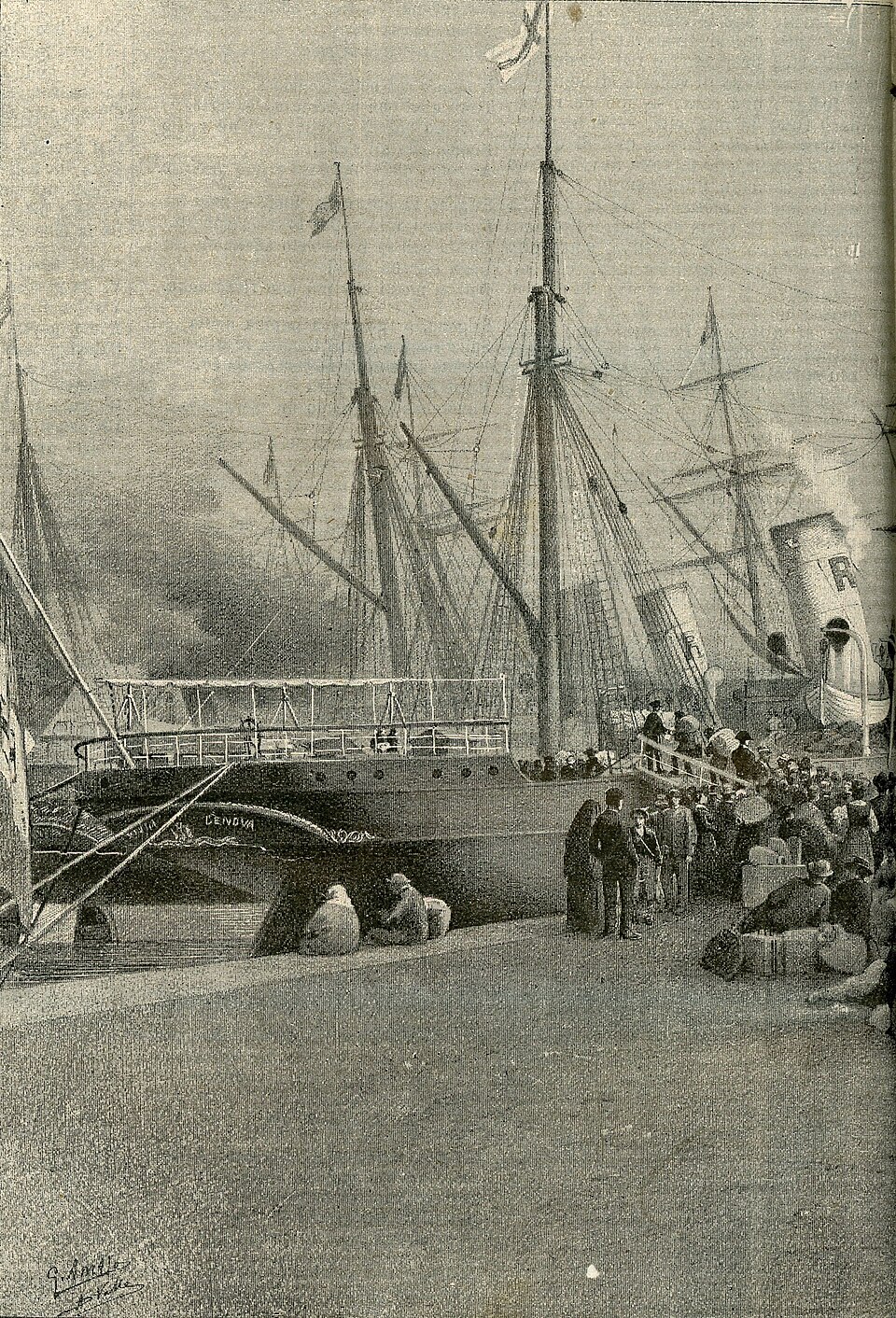
Italian emigrants boarding a ship at the port of Genoa, 1885. Source: Wikimedia Commons.
The Great Italian Emigration
Italian emigration became a mass phenomenon during the final decades of the 19th century. Official Italian emigration statistics began in 1876 and document the extraordinary scale of this movement.
Between 1876 and the years immediately preceding World War I, nearly 14 million people left Italy. Not all of them emigrated permanently, and some later returned to Italy, but this period transformed communities throughout the country and created lasting connections between Italy and destinations around the world.
Emigration continued after World War I and increased again after World War II, when many Italians left for countries offering greater employment and economic opportunities.
These migrations created Italian communities across the United States, Canada, Australia, South America, and other parts of the world. For genealogists and descendants today, the records created during these journeys can provide important clues for tracing a family back to its place of origin in Italy.
Why Did So Many Italians Emigrate?
The reasons behind Italian emigration varied considerably depending on the region, historical period, and individual family. Economic hardship, limited employment opportunities, population growth, and difficult living conditions encouraged many people to seek a better future abroad.
In rural areas, many families depended on agriculture and seasonal work. Limited access to land and unstable incomes made emigration an attractive option, particularly when relatives or neighbors had already established themselves overseas.
Industrialization and economic change also influenced migration patterns. Over time, established Italian communities abroad created family and regional networks that made it easier for new emigrants to follow relatives, friends, and fellow townspeople to the same destinations.
Political events, wars, and the economic difficulties of the postwar years contributed to later waves of emigration. After World War II, many Italians left for the United States, Canada, Australia, South America, and European countries in search of work and greater economic stability.
These migration patterns are important in genealogy because relatives and people from the same Italian town often settled near one another abroad. Neighbors, witnesses, traveling companions, and relatives can sometimes provide the clue that identifies an ancestor's original town in Italy.
Main Italian Regions of Emigration
Italian emigration involved virtually every region of Italy, but the areas of greatest departure changed over time. During the late 19th century, large numbers of emigrants came from northern regions, particularly Veneto, Friuli-Venezia Giulia, Piedmont, and Lombardy.
In the late 19th and early 20th centuries, emigration from southern Italy and Sicily increased substantially. Sicily, Campania, Calabria, Abruzzo, Basilicata, and other southern regions became major areas of departure, especially for emigrants traveling to the Americas.
Migration was often highly localized. People from the same town, village, or surrounding area frequently followed relatives and acquaintances who had emigrated before them. As a result, particular Italian communities sometimes developed especially strong connections with specific cities or regions abroad.
For genealogical research, knowing only that an ancestor came from “Sicily,” “Calabria,” “Naples,” or “Veneto” is usually not enough. Each region contains many municipalities and smaller localities, and historical place names, administrative changes, and spelling variations can make identification more difficult.
The key is to identify the exact Comune where the ancestor was born, married, or lived before emigrating. Once that location is established, the search can move from immigration records abroad to the original records preserved in Italy.
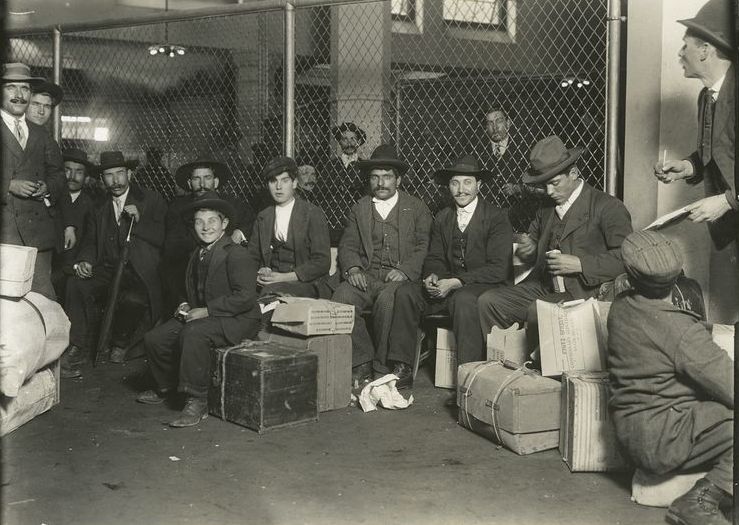
Italian immigrants with their luggage at Ellis Island, 1908. Photograph by Lewis W. Hine. Source: Wikimedia Commons.
Italian Immigration to the United States
The United States became one of the principal destinations of Italian emigration. Although Italians had been arriving in North America for generations, mass immigration increased dramatically during the late 19th and early 20th centuries.
More than 4 million Italians arrived in the United States by 1920, with particularly large numbers arriving during the decades surrounding the turn of the 20th century. Many came from southern Italy and Sicily, although Italian immigrants originated from regions throughout the country.
New York was one of the principal gateways for Italian immigrants, and Ellis Island became closely associated with this period of migration. Italian communities developed not only in New York but throughout the United States, including cities and towns in the Northeast, Midwest, West Coast, and other parts of the country.
For descendants researching an Italian ancestor today, American records can provide essential clues to the family's place of origin. Passenger lists, naturalization records, marriage and death records, census records, military records, and other documents may contain a town name, province, names of relatives, or other information that can help identify the correct person in Italy.
Finding the exact Italian town of origin is often the turning point in Italian-American genealogy. Once the Comune is identified, research can continue in the original Italian civil, parish, military, and historical records.
Italian Immigration to Canada
Italian immigration to Canada developed over several different periods. Italians were already settling in the country during the late 19th and early 20th centuries, but immigration increased significantly after World War II, when Canada became an important destination for Italians seeking employment and new opportunities.
Many Italian immigrants settled in major urban centers such as Toronto and Montreal, while others established themselves in communities throughout Ontario, Quebec, and other Canadian provinces. Family and hometown connections often influenced where newcomers settled, creating communities with strong ties to particular areas of Italy.
For descendants researching their Italian ancestry, Canadian records can provide valuable clues about an immigrant's place of birth or last residence in Italy. Passenger records, immigration documents, naturalization records, marriage and death records, church records, and other sources may identify a town, province, relative, or other detail that helps establish the family's Italian origin.
As with Italian-American genealogy, the name of the region alone is rarely sufficient. Identifying the exact Comune in Italy makes it possible to search the original civil and historical records and reconstruct earlier generations of the family.
Italian Immigration to Australia
Italian migration to Australia has a long history, but it increased substantially during the decades following World War II. Thousands of Italians moved to Australia in search of employment, economic stability, and new opportunities for their families.
Large Italian communities developed in Melbourne, Sydney, Adelaide, Perth, and other Australian cities and regional areas. As in other countries, migration often followed family and hometown networks, with relatives and people from the same Italian communities settling near one another.
For descendants of Italian immigrants in Australia, local records can provide important evidence about a family's origins. Passenger and immigration records, naturalization documents, marriage and death records, electoral rolls, church records, and other historical sources may contain information about an ancestor's birthplace, parents, relatives, or last residence in Italy.
Place names recorded in Australian documents are not always precise. A record may identify only a province or region, or the Italian locality may have been misspelled or recorded phonetically. Comparing several documents can therefore be necessary before the correct place in Italy can be identified.
Once the exact Comune of origin is established, research can continue directly in Italian civil, parish, military, and other historical records.
Italian Emigration to Argentina, Brazil, Uruguay, and Other Latin American Countries
Latin America was another major destination for Italian emigrants. Argentina, Brazil, Uruguay, Venezuela, and other countries received large numbers of Italians during different periods of migration, creating communities whose descendants today number in the millions.
Argentina became one of the most important destinations for Italian emigrants, and Italian migration had a lasting influence on the country's population, culture, and family history. Brazil also received substantial Italian immigration, particularly in São Paulo and the southern states, while important Italian communities developed in Uruguay and Venezuela.
As in the United States, Canada, and Australia, family and hometown networks played an important role. Relatives, neighbors, and people from the same Italian town often followed earlier emigrants to the same destinations.
For descendants in Latin America, passenger lists, civil records, church records, immigration documents, and other historical sources may contain the clues needed to identify an ancestor's birthplace or last residence in Italy.
Once the Italian Comune of origin is identified, the family can often be traced further through records preserved in Italy.
For Spanish-speaking readers: learn more about Italian emigration to Latin America and researching Italian ancestors.
For Portuguese-speaking readers: learn more about emigration from Veneto to Brazil.
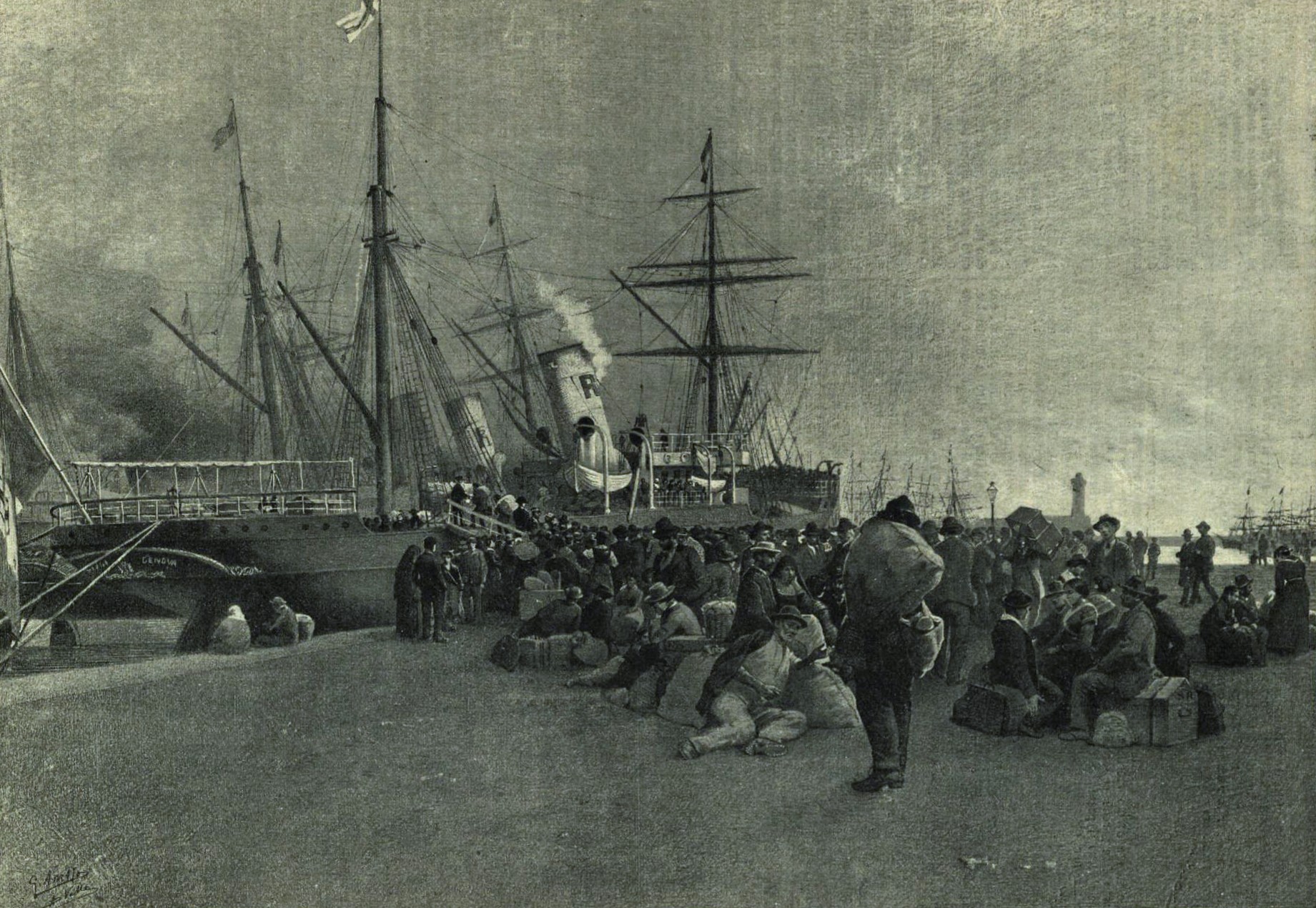
Italian emigrants boarding the steamship Scrivia in Genoa, 1884. Illustration by G. Amato and A. Della Valle. Source: L'Illustrazione Italiana / Wikimedia Commons.
How to Find Your Italian Ancestor's Town of Origin
One of the most important steps in Italian genealogy is identifying the exact town or Comune where an ancestor was born or lived before emigrating. Knowing only that a person came from Italy, Sicily, Calabria, Campania, Veneto, or another region is usually not enough to locate the original Italian records.
The search often begins with documents created in the country where the ancestor settled. Passenger lists, naturalization papers, marriage and death records, church records, census records, military records, obituaries, and other historical sources may contain information about a birthplace, province, last residence, parents, relatives, or traveling companions.
It is important to compare several records whenever possible. Italian place names were sometimes misspelled, written phonetically, translated, or confused with the name of a province or nearby city. The same ancestor's name may also appear in different forms after immigration.
Information about relatives can be just as important as information about the ancestor being researched. Parents, siblings, spouses, witnesses, neighbors, and traveling companions may provide the clue needed to identify the family's original town in Italy.
Once a possible Comune has been identified, the information should be compared with records preserved in Italy to confirm that the correct person and family have been located.
Documents That Can Help Identify an Italian Ancestor
Once the ancestor's Italian town or Comune of origin has been identified, Italian civil records can provide essential information for confirming family relationships and reconstructing earlier generations.
Birth Records
Italian birth records can provide the date and place of birth, the names of the parents, and other information recorded by the local civil registrar. Depending on the period and type of record, additional annotations may also refer to later marriages or other events.
Marriage Records
Marriage records are particularly valuable for genealogical research because they can connect two family lines and may provide information about the spouses, their parents, ages, birthplaces, residences, and occupations.
Death Records
Death records can help confirm identity, residence, age, marital status, and family relationships. They can also provide useful evidence when an ancestor's birth information is uncertain or when several people with similar names must be distinguished.
Passenger Lists and Immigration Records
Passenger lists and immigration records can be among the most useful sources for identifying where an Italian ancestor came from. Depending on the country, period, and type of record, they may include an immigrant's age, occupation, last residence, destination, traveling companions, relatives in Italy, or the name of a person they intended to join after arrival.
These details can be especially valuable when the exact Italian birthplace is unknown. A passenger list may identify a town or province, while the names of relatives or traveling companions can provide additional evidence for distinguishing between people with similar names.
However, information in immigration records should be interpreted carefully. Place names may have been misspelled, abbreviated, or recorded phonetically, and personal names were sometimes written differently from their original Italian form.
Passenger and immigration records can provide the bridge between an ancestor's life abroad and the records preserved in their hometown in Italy.
Parish, Military, Residence, and Other Historical Records
Civil registration records are not the only sources available for Italian genealogy. When civil records are unavailable, incomplete, or do not extend far enough back in time, other historical sources can provide valuable information about an ancestor and their family.
Parish registers of baptisms, marriages, and burials can be essential for research before the introduction of civil registration and can sometimes extend a family line back several generations.
Military records, including liste di leva (conscription lists) and ruoli matricolari (military service records), may provide a man's date and place of birth, parents' names, occupation, residence, physical description, and military service information.
Population and residence records can help establish where a family lived and, when available, document movements between different municipalities. Notarial records, inheritance documents, municipal records, and other archival collections may provide additional evidence when ordinary civil records are not sufficient.
These records may be preserved in Italian State Archives, municipal archives, diocesan archives, parishes, and other local repositories. The sources available vary considerably depending on the location and historical period.
Combining different types of records is often the key to solving difficult genealogical problems and reconstructing a family across several generations.
Genealogy Research Directly in Italy
Many Italian historical records are still not available online. In these cases, genealogical research may require direct access to municipalities, State Archives, diocesan archives, parishes, and other local repositories in Italy.
As a professional Italian genealogist based in Italy, I conduct research for people who want to discover their Italian origins, identify an ancestor's hometown, or reconstruct their family history in Italy.
I can help identify the correct Comune of origin, locate civil and historical records, overcome genealogical brick walls, and extend a family line to earlier generations when the surviving documentation allows it.
Once the appropriate records have been located, I can also obtain official certificates, extracts, or copies from the relevant Italian authorities when required.
Every genealogical research project is different. Before beginning, I evaluate the information already available, the location and period to be researched, and the repositories that may preserve the relevant records. A quote is prepared after evaluating the difficulty and feasibility of the research.
Do You Have an Italian Ancestor but Don't Know Their Town of Origin?
If you know the name of your Italian ancestor but have not been able to identify their exact place of birth or origin, I can evaluate the information and documents you already have and determine what possibilities exist for continuing the research.
The more information available — full name, approximate date of birth, parents' or spouse's names, immigration details, and place of residence after emigration — the greater the chances of correctly identifying the ancestor and locating their place of origin in Italy.
Even when the Comune is unknown, records created after immigration and information about relatives, traveling companions, or other people from the same community may provide the clues needed to continue the search.