
Find Your Ancestor's Town in Sicily
Tracing a Sicilian family often begins with identifying the exact town, village or locality where an ancestor was born, married or lived.
This can be more difficult than it seems. Historical records created in Italy or after emigration may contain old place names, alternative spellings, former municipal names, or the name of a small village or frazione rather than the municipality to which it belongs.
Over time, some Sicilian towns changed their names, while others were incorporated into different municipalities. A place name found on an old birth certificate, passenger list, naturalization record, marriage record or family document may therefore be different from the name used on modern maps.
This guide is designed to help identify Sicilian municipalities, villages, frazioni and historical place names and connect them with their present-day locations.
Once the correct municipality has been identified, it becomes much easier to determine where civil registration records, parish registers and other genealogical sources may be preserved.
Why the Exact Sicilian Town Matters
Italian genealogical records are generally organized locally. Knowing that an ancestor came from “Sicily” or even from a particular province is often not enough to locate a birth, marriage or death record.
The exact municipality — Comune in Italian — is usually essential. Smaller villages and localities may belong to a larger municipality, and historical documents may use names that have since changed.
For genealogical research, correctly identifying the historical place name and the modern municipality can therefore be one of the most important steps in tracing a Sicilian family.
Sicilian Provinces and Municipalities
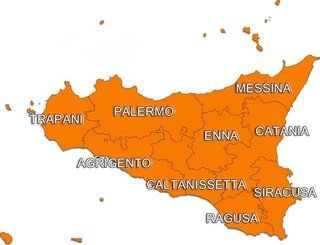
Sicily is divided into nine provincial areas, each containing numerous municipalities, villages and smaller localities. For genealogical research, it is important to distinguish between the modern municipality (Comune) and historical or local place names that may appear in older records.
The sections below are organized geographically to help identify the present-day municipality associated with a Sicilian ancestor's place of origin.
- Agrigento
- Caltanissetta
- Catania
- Enna
- Messina
- Palermo
- Ragusa
- Syracuse (Siracusa)
- Trapani
Towns and Villages in the Province of Agrigento
The Province of Agrigento, historically also associated with the name Girgenti, is located along the southern coast of Sicily and includes many towns that were important places of origin for Sicilian emigrants.
When researching ancestors from this area, it is important to identify the exact municipality where a birth, marriage or death was registered. Historical documents may use older place names, local names or the name of a smaller village rather than the modern municipality.
One of the most important examples is Agrigento itself, which was officially known as Girgenti until 1927. The name Girgenti therefore frequently appears in historical civil records, immigration documents and other genealogical sources.
Municipalities in the Province of Agrigento
Agrigento
Alessandria della Rocca
Aragona
Bivona
Burgio
Calamonaci
Caltabellotta
Camastra
Cammarata
Campobello di Licata
Canicattì
Casteltermini
Castrofilippo
Cattolica Eraclea
Cianciana
Comitini
Favara
Grotte
Joppolo Giancaxio
Lampedusa e Linosa
Licata
Lucca Sicula
Menfi
Montallegro
Montevago
Naro
Palma di Montechiaro
Porto Empedocle
Racalmuto
Raffadali
Ravanusa
Realmonte
Ribera
Sambuca di Sicilia
San Biagio Platani
San Giovanni Gemini
Santa Elisabetta
Santa Margherita di Belice
Sant'Angelo Muxaro
Santo Stefano Quisquina
Sciacca
Siculiana
Villafranca Sicula
Historical Place Names in the Agrigento Area
Historical place names are particularly important in genealogy because the name appearing on an old Italian or American document may differ from the name used today.
Agrigento — formerly Girgenti
The city and municipality of Agrigento were officially known as Girgenti until 1927, when the name Agrigento was restored. Genealogical documents created before that date may therefore identify an ancestor's birthplace as Girgenti rather than Agrigento.
A document stating that an ancestor was born in Girgenti should therefore be interpreted carefully: depending on the context, the term may refer to the city itself or historically to the wider provincial area.
Villages and Localities
Smaller villages, hamlets and localities can also appear as places of birth or residence in historical records. In Italian these are often referred to as frazioni or località.
For example, within the present-day municipality of Agrigento are localities and settlements including Montaperto, Giardina Gallotti, Villaseta and Villaggio Mosè. Municipal planning documents specifically identify Montaperto and Giardina Gallotti as frazioni and also document Villaseta and Villaggio Mosè as established settlements within the municipal territory.
When a smaller locality appears in a genealogical document, identifying the municipality to which it belongs is essential because civil registration records are normally searched through the appropriate Comune.
Genealogy Research in Agrigento
If your ancestor came from Agrigento or one of the municipalities listed above, I can help identify the appropriate civil, parish or archival sources and determine where surviving records may be preserved.
Historical names, spelling variations and small localities can sometimes make Sicilian genealogy difficult. Comparing the place names found in immigration, naturalization, marriage, death and other family records can often help identify the correct ancestral municipality.
Towns and Villages in the Province of Caltanissetta
The Province of Caltanissetta is located in central and southern Sicily and has historically been associated with agriculture, sulfur mining and significant emigration overseas.
For genealogical research, identifying the correct municipality is particularly important because historical records may refer to places by names that are different from those used today. Provincial boundaries have also changed over time, so a town appearing in an older record as part of the Province of Caltanissetta may today belong to another Sicilian province. Historical ISTAT records, for example, show a different administrative organization of the province from the one existing today.
Municipalities in the Province of Caltanissetta
Acquaviva Platani
Bompensiere
Butera
Caltanissetta
Campofranco
Delia
Gela
Marianopoli
Mazzarino
Milena
Montedoro
Mussomeli
Niscemi
Resuttano
Riesi
San Cataldo
Santa Caterina Villarmosa
Serradifalco
Sommatino
Sutera
Vallelunga Pratameno
Villalba
Historical Place Names in the Caltanissetta Area
Historical place names can be especially important when researching ancestors from this part of Sicily. A birthplace recorded on an old Italian document, passenger list, naturalization record or death certificate may not correspond immediately to the name shown on a modern map.
Gela — formerly Terranova and Terranova di Sicilia
The present-day municipality of Gela was known as Terranova until 1862 and as Terranova di Sicilia from 1862 until 1927. The ancient name Gela was subsequently restored.
For genealogists, this distinction is particularly important. An ancestor whose American records state that he or she was born in Terranova, Sicily may actually have been born in the present-day municipality of Gela.
Therefore, records concerning ancestors born in Terranova or Terranova di Sicilia should normally be investigated in connection with modern Gela.
Caltanissetta and the historical name Nissa
The name Caltanissetta has much older linguistic origins. Historical scholarship connects it with ancient Nissa or Nisa and the Arabic Qalʿat, meaning fortress or castle. This ancient origin also survives indirectly in the modern Italian term Nisseni for the inhabitants of Caltanissetta.
For genealogical purposes, however, Nissa should not be treated as a modern alternative municipal name in the same way as Terranova/Gela. It is primarily of historical and linguistic interest.
Villages and Localities
Smaller villages, rural settlements, mining communities and localities may also appear in records concerning families from the Province of Caltanissetta.
This is particularly relevant in an area historically associated with sulfur mining. Older records may sometimes identify a mine, rural district or small settlement in addition to, or instead of, the municipality itself. Historical sources, for example, record the mining settlement of Trabia within the territory associated with Sommatino.
When a small locality appears in a genealogical document, the important step is to identify the municipality responsible for the civil registration records during the relevant historical period.
Changing Provincial Boundaries
Researchers should also be aware that the historical Province of Caltanissetta was not identical to the present-day province.
Older records may describe a Sicilian town as being in the Province of Caltanissetta even though that town is now associated with another province. Historical sources document, for example, the transfer of the Piazza Armerina district when the Province of Enna was created in the 1920s.
This is an important consideration when interpreting old Italian records and foreign documents created by Sicilian immigrants.
Genealogy Research in Caltanissetta
If your ancestor came from Caltanissetta, Gela, Mussomeli, Niscemi, Riesi or another municipality in the province, I can help identify the appropriate civil, parish and archival sources for further research.
Historical place names, changing administrative boundaries and references to small rural or mining localities can sometimes make it difficult to determine exactly where an ancestor's records should be searched.
Identifying the correct historical location and its present-day municipality is often the first step toward locating the original Sicilian records.
Towns and Villages in the Province of Catania
The Province of Catania, on the eastern coast of Sicily, includes the city of Catania, the communities surrounding Mount Etna, the coastal towns along the Ionian Sea, and numerous inland municipalities.
This area experienced significant emigration during the nineteenth and twentieth centuries. For genealogical research, identifying the exact municipality is essential because historical documents may contain an older municipal name, the name of a village or locality, or an administrative designation that has since changed.
The territorial organization of the Catania area has also changed over time. Some villages became independent municipalities, while other municipalities changed their official names or were temporarily combined with neighboring towns.
Municipalities in the Province of Catania
Aci Bonaccorsi
Aci Castello
Aci Catena
Aci Sant'Antonio
Acireale
Adrano
Belpasso
Biancavilla
Bronte
Calatabiano
Caltagirone
Camporotondo Etneo
Castel di Iudica
Castiglione di Sicilia
Catania
Fiumefreddo di Sicilia
Giarre
Grammichele
Gravina di Catania
Licodia Eubea
Linguaglossa
Maletto
Maniace
Mascali
Mascalucia
Mazzarrone
Militello in Val di Catania
Milo
Mineo
Mirabella Imbaccari
Misterbianco
Motta Sant'Anastasia
Nicolosi
Palagonia
Paternò
Pedara
Piedimonte Etneo
Raddusa
Ramacca
Randazzo
Riposto
San Cono
San Giovanni la Punta
San Gregorio di Catania
San Michele di Ganzaria
San Pietro Clarenza
Sant'Agata li Battiati
Sant'Alfio
Santa Maria di Licodia
Santa Venerina
Scordia
Trecastagni
Tremestieri Etneo
Valverde
Viagrande
Vizzini
Zafferana Etnea
Historical Place Names in the Catania Area
Historical place names are particularly important when researching families from the Province of Catania. Several present-day municipalities were recorded under shorter or different official names during the nineteenth century.
Some particularly useful examples for genealogical research include:
Fiumefreddo di Sicilia — formerly Fiumefreddo
Historical records may identify the municipality simply as Fiumefreddo. The expanded municipal name Fiumefreddo di Sicilia was adopted after Italian unification.
Gravina di Catania — formerly Gravina
Records from the earlier nineteenth century may use simply Gravina rather than the present-day name Gravina di Catania.
Licodia Eubea — formerly Licodia
The municipality was historically known simply as Licodia before assuming the name Licodia Eubea.
Militello in Val di Catania — formerly Militello
Older records may identify the municipality simply as Militello. The longer modern name helps distinguish it from other Italian places with similar names.
Mirabella Imbaccari — formerly Mirabella
Genealogical documents from the nineteenth century may contain the shorter name Mirabella.
Piedimonte Etneo — formerly Piedimonte
Older civil and family records may identify the town simply as Piedimonte rather than Piedimonte Etneo.
San Gregorio di Catania — formerly San Gregorio
The municipality historically appeared under the shorter name San Gregorio.
San Michele di Ganzaria — formerly San Michele
Older records may use San Michele, while the present-day municipality is San Michele di Ganzaria.
Tremestieri Etneo — formerly Tremestieri
The municipality was historically known simply as Tremestieri before adopting its present name.
Giarre, Riposto and Ionia: An Important Genealogical Case
The history of Giarre and Riposto deserves particular attention because their municipal organization changed during the twentieth century.
In 1939 the municipalities of Giarre and Riposto were combined into a new municipality initially called Giarre Riposto. In 1942 the municipality was renamed Ionia. In 1945 the combined municipality was abolished and the separate municipalities of Giarre and Riposto were re-established.
This means that records created during this period may contain Giarre Riposto or Ionia rather than the modern municipality name expected by a researcher today.
For genealogical research, the date of the document is therefore particularly important when interpreting these place names.
Villages, Frazioni and Changing Municipalities
Some present-day municipalities in the Catania area developed from villages or frazioni that previously belonged to larger municipalities.
For example, historical ISTAT records document the creation of Sant'Alfio from the frazioni of Milo and Sant'Alfio in 1923. Milo was later re-established as an independent municipality. Santa Venerina was constituted in 1934 using territory and frazioni previously associated with Acireale, Giarre and Zafferana Etnea.
Another interesting case is San Giovanni di Galermo, formerly an independent municipality and incorporated into Catania in 1926. Today the name survives as part of the urban geography of Catania, but an older genealogical record may refer to San Giovanni di Galermo as a municipality in its own right.
These changes demonstrate why a place name found in an old document should always be interpreted according to the historical period in which the record was created.
Misterbianco and Historical Settlements
The Catania area also provides examples where the location of a community changed without simply changing its municipal name.
The original settlement of Misterbianco was severely affected by the eruption of Mount Etna in 1669. Historical sources distinguish the older settlement, today generally referred to as Misterbianco Vecchio, from the town that subsequently developed in its present location.
Although this predates most Italian civil registration records, such historical geography can become relevant when researching older parish records and family lines extending into earlier centuries.
Genealogy Research in Catania
If your ancestor came from Catania, Acireale, Caltagirone, Giarre, Riposto, Paternò, Misterbianco or another municipality in the province, I can help identify the appropriate civil, parish and archival sources for further research.
Old municipal names, changing administrative boundaries and references to small villages or localities can make it difficult to identify the correct place of origin.
Understanding the historical geography of the Catania area can therefore be an important step toward locating an ancestor's original birth, marriage, death, parish or other family records.
Towns and Villages in the Province of Enna
The Province of Enna is located in the heart of Sicily and is the only Sicilian province without a coastline. Its central position and complex administrative history make historical place names particularly important for genealogical research.
The province itself is relatively recent. It was established in 1927, using municipalities that had previously belonged primarily to the provinces of Catania and Caltanissetta. It was initially created under the name Province of Castrogiovanni, but later in the same year the city and province assumed the name Enna.
This means that an ancestor born in one of today's municipalities of the Province of Enna before 1927 may have a birth, marriage or other historical record identifying the place as being in the Province of Catania or Caltanissetta, rather than Enna.
Municipalities in the Province of Enna
Agira
Aidone
Assoro
Barrafranca
Calascibetta
Catenanuova
Centuripe
Cerami
Enna
Gagliano Castelferrato
Leonforte
Nicosia
Nissoria
Piazza Armerina
Pietraperzia
Regalbuto
Sperlinga
Troina
Valguarnera Caropepe
Villarosa
These are the 20 present-day municipalities of the Province of Enna.
Historical Place Names in the Enna Area
Historical names are especially significant in this province because several names appearing in nineteenth- and early twentieth-century documents may not correspond immediately to the names found on modern maps.
Enna — formerly Castrogiovanni
The most important example is the provincial capital itself. The present-day city of Enna was officially known as Castrogiovanni until 1927. The name Enna was restored in that year.
For genealogical research, this distinction is extremely important. An ancestor whose Italian or American records state that he or she was born in:
Castrogiovanni, Sicily
may actually have been born in the present-day municipality of Enna.
Records created before the name change should therefore normally be searched under Castrogiovanni, while modern municipal requests must be directed to Enna.
The historical name itself has much older origins. Treccani traces Castrogiovanni through medieval and Arabic forms ultimately connected with ancient Enna.
Centuripe — formerly Centorbi
Another particularly useful genealogical place-name variation concerns Centuripe. Historical sources preserve Centorbi as its previous denomination, while the present-day municipality uses the ancient name Centuripe.
A document referring to an ancestor from Centorbi should therefore be investigated in connection with the modern municipality of Centuripe.
The Creation of the Province of Enna
The creation of the Province of Enna in 1927 is particularly important when interpreting older genealogical documents.
The new province was formed from the former districts of Nicosia, previously associated with the Province of Catania, and Piazza Armerina, previously associated with the Province of Caltanissetta.
As a result, an ancestor born before 1927 in a town that is now in the Province of Enna may correctly appear in historical records as having been born in another province.
For example, an older document may associate Nicosia with Catania or Piazza Armerina with Caltanissetta. This does not necessarily indicate an error in the document; it may simply reflect the administrative boundaries that existed at the time.
This distinction can be especially useful when comparing Italian records with passenger lists, naturalization records, census records and death certificates created overseas.
Villages and Localities
The Province of Enna also contains numerous smaller villages, rural districts and historical localities.
One particularly recognizable example is Pergusa, located within the municipality of Enna and known for the nearby Lake Pergusa. Historical and genealogical documents may sometimes identify a smaller locality rather than the municipality itself. Treccani identifies Pergusa as being near Enna and part of its geographical territory.
When a village, frazione or rural locality appears as an ancestor's birthplace or residence, it is therefore important to determine the municipality responsible for the civil registration records during the relevant period.
Historical Provinces and Genealogical Records
Modern provincial boundaries should not automatically be applied to nineteenth-century records.
For researchers working with families from central Sicily, the date of a document can be just as important as the place name itself.
For example:
Castrogiovanni → Enna
Centorbi → Centuripe
Nicosia → historically Province of Catania → today Province of Enna
Piazza Armerina → historically Province of Caltanissetta → today Province of Enna
These changes help explain why the same Sicilian ancestor may appear to have different provincial places of origin in different records.
Genealogy Research in Enna
If your ancestor came from Enna, Piazza Armerina, Nicosia, Centuripe, Leonforte, Troina or another municipality in the province, I can help identify the appropriate civil, parish and archival sources for further research.
Historical municipal names and changing provincial boundaries can make research in central Sicily particularly challenging. A place recorded in an immigration or naturalization document may be historically correct even though the same location appears under a different municipality or province today.
Identifying both the historical place name and the modern municipality can therefore be an essential step toward locating the original Sicilian records.
Towns and Villages in the Province of Messina
The Province of Messina occupies the northeastern part of Sicily and includes the city of Messina, the Tyrrhenian and Ionian coastal areas, the Nebrodi and Peloritani Mountains, and the Aeolian Islands.
This area experienced substantial emigration during the nineteenth and twentieth centuries, particularly to the United States, Australia, Canada and South America. Many families originating from the Province of Messina established large communities overseas.
For genealogical research, identifying the exact municipality is essential. Historical documents may contain an older municipal name, the name of a frazione or village, or simply “Messina,” which may refer either to the city itself or more generally to the province.
Municipalities in the Province of Messina
Acquedolci
Alcara li Fusi
Alì
Alì Terme
Antillo
Barcellona Pozzo di Gotto
Basicò
Brolo
Capizzi
Capo d'Orlando
Capri Leone
Caronia
Casalvecchio Siculo
Castel di Lucio
Castell'Umberto
Castelmola
Castroreale
Cesarò
Condrò
Falcone
Ficarra
Fiumedinisi
Floresta
Fondachelli-Fantina
Forza d'Agrò
Francavilla di Sicilia
Frazzanò
Furci Siculo
Furnari
Gaggi
Galati Mamertino
Gallodoro
Giardini-Naxos
Gioiosa Marea
Graniti
Gualtieri Sicaminò
Itala
Leni
Letojanni
Librizzi
Limina
Lipari
Longi
Malfa
Malvagna
Mandanici
Mazzarrà Sant'Andrea
Merì
Messina
Milazzo
Militello Rosmarino
Mirto
Mistretta
Moio Alcantara
Monforte San Giorgio
Mongiuffi Melia
Montagnareale
Montalbano Elicona
Motta Camastra
Motta d'Affermo
Naso
Nizza di Sicilia
Novara di Sicilia
Oliveri
Pace del Mela
Pagliara
Patti
Pettineo
Piraino
Raccuja
Reitano
Roccafiorita
Roccalumera
Roccavaldina
Roccella Valdemone
Rodì Milici
Rometta
San Filippo del Mela
San Fratello
San Marco d'Alunzio
San Pier Niceto
San Piero Patti
San Salvatore di Fitalia
San Teodoro
Sant'Agata di Militello
Sant'Alessio Siculo
Santa Domenica Vittoria
Santa Lucia del Mela
Santa Marina Salina
Santa Teresa di Riva
Santo Stefano di Camastra
Saponara
Savoca
Scaletta Zanclea
Sinagra
Spadafora
Taormina
Terme Vigliatore
Torregrotta
Torrenova
Tortorici
Tripi
Tusa
Ucria
Valdina
Venetico
Villafranca Tirrena
Historical Place Names in the Messina Area
Historical place names can be particularly important in the Province of Messina. Several municipalities have changed their official names, while other modern municipalities developed from villages or territories that were previously administered by neighboring towns.
A researcher should therefore interpret the place name according to the date of the document rather than assuming that modern municipal boundaries always applied.
Giardini-Naxos — formerly Giardini
The present-day municipality of Giardini-Naxos was historically known as Giardini. The addition of Naxos reflects the area's connection with the ancient Greek settlement of Naxos.
Older civil records and immigration documents may therefore identify an ancestor simply as being from Giardini, Messina.
San Marco d'Alunzio — formerly San Marco
Historical documents may use the shorter name San Marco for the present-day municipality of San Marco d'Alunzio. The modern name preserves the connection with the ancient settlement of Aluntium.
Because many Italian towns contain “San Marco” in their names, the province and historical context can be particularly important when identifying the correct Sicilian municipality.
Castel di Lucio — formerly Castelluccio
The present-day municipality of Castel di Lucio was historically known as Castelluccio. Older genealogical records and documents created by emigrants may therefore contain Castelluccio rather than the modern municipal name.
This distinction is especially important because similar place names occur elsewhere in Italy.
Castell'Umberto — formerly Castania
The municipality now known as Castell'Umberto was historically associated with the name Castania. Researchers working with nineteenth-century family records may therefore encounter Castania instead of Castell'Umberto.
Barcellona Pozzo di Gotto
Barcellona Pozzo di Gotto is another particularly interesting case for genealogical research.
The modern municipality developed from the historically distinct communities of Barcellona and Pozzo di Gotto, which were subsequently united into a single municipality.
Consequently, older records may refer specifically to Barcellona or Pozzo di Gotto, rather than to the combined modern name.
When researching an ancestor from this area, the date and precise wording of the place name can help determine which historical civil or parish records should be consulted.
The Aeolian Islands
The Aeolian Islands (Isole Eolie) are particularly important in Sicilian genealogy because they experienced substantial emigration overseas.
The archipelago includes:
Lipari
Vulcano
Salina
Stromboli
Panarea
Filicudi
Alicudi
However, the name of an island does not always correspond to the name of the municipality responsible for civil registration.
Today the Aeolian Islands are divided among four municipalities:
Lipari — includes Lipari itself as well as Vulcano, Stromboli, Panarea, Filicudi and Alicudi.
Leni — located on the island of Salina.
Malfa — located on the island of Salina.
Santa Marina Salina — located on the island of Salina.
This distinction can be extremely important in genealogy.
For example, a document may state that an ancestor was born on Stromboli, but the relevant civil records are associated with the municipality of Lipari. Similarly, an ancestor recorded simply as being from Salina requires further investigation to determine the appropriate municipality.
Villages and Frazioni in the Messina Area
The Province of Messina contains a particularly large number of small villages and frazioni. Some are located along the coast, while others are in mountainous areas or within larger municipal territories.
These smaller place names can appear frequently in civil records, parish registers, passenger lists and family documents.
This is especially relevant for the municipality of Messina, whose extensive territory includes numerous villages and historical communities outside the urban center.
A document stating only the name of a small village may therefore require identifying the municipality to which that village belonged at the time the record was created.
Messina: City or Province?
One of the most common problems in researching ancestors from northeastern Sicily is interpreting the word Messina.
An overseas record stating:
“Born in Messina, Sicily”
does not necessarily prove that the person was born in the city of Messina.
In immigration, naturalization, census, marriage and death records created outside Italy, “Messina” may sometimes have been used more broadly to indicate the province rather than the exact municipality.
Before requesting a record from the Comune di Messina, it is therefore important to compare all available evidence and determine whether another municipality in the province may have been the ancestor's actual birthplace.
The 1908 Messina Earthquake and Genealogical Research
The catastrophic Messina earthquake of December 28, 1908 devastated Messina and Reggio Calabria and caused enormous loss of life and destruction.
For genealogical research, major historical events such as this can affect where records survived, where families subsequently lived, and how individuals may appear in later documentation.
Researchers should not automatically assume, however, that all earlier Messina records were destroyed. The survival and location of records must be evaluated according to the particular municipality, parish, archive and type of document being researched.
This is especially important when working with families from Messina whose history extends across the period of the 1908 earthquake.
Genealogy Research in Messina
If your ancestor came from Messina, Lipari, Milazzo, Patti, Barcellona Pozzo di Gotto, Taormina, the Aeolian Islands or another municipality in the province, I can help identify the appropriate civil, parish and archival sources for further research.
Historical municipal names, small villages, island communities and references to the province rather than the exact town can make genealogy research in the Messina area particularly challenging.
Identifying the historical place name, the correct municipality and the administrative organization that existed at the time can be essential for locating an ancestor's original Sicilian records.
Towns and Villages in the Province of Palermo
The Palermo area occupies a large part of northwestern Sicily and extends from the Tyrrhenian coast to the mountainous interior of the Madonie and the inland communities south of Palermo.
The city and surrounding municipalities were major places of origin for Sicilian emigrants during the nineteenth and twentieth centuries, particularly those who settled in the United States.
For genealogical research, however, a document stating simply “Palermo, Sicily” does not always establish that an ancestor was born in the city of Palermo. In foreign records, Palermo may sometimes refer to the province, while the actual birthplace was another municipality, village or rural locality.
Identifying the exact place of origin is therefore essential before searching for Italian civil, parish or archival records.
Municipalities in the Palermo Area
Alia
Alimena
Aliminusa
Altavilla Milicia
Altofonte
Bagheria
Balestrate
Baucina
Belmonte Mezzagno
Bisacquino
Blufi
Bolognetta
Bompietro
Borgetto
Caccamo
Caltavuturo
Campofelice di Fitalia
Campofelice di Roccella
Campofiorito
Camporeale
Capaci
Carini
Castelbuono
Casteldaccia
Castellana Sicula
Castronovo di Sicilia
Cefalà Diana
Cefalù
Cerda
Chiusa Sclafani
Ciminna
Cinisi
Collesano
Contessa Entellina
Corleone
Ficarazzi
Gangi
Geraci Siculo
Giardinello
Giuliana
Godrano
Gratteri
Isnello
Isola delle Femmine
Lascari
Lercara Friddi
Marineo
Mezzojuso
Misilmeri
Monreale
Montelepre
Montemaggiore Belsito
Palazzo Adriano
Palermo
Partinico
Petralia Soprana
Petralia Sottana
Piana degli Albanesi
Polizzi Generosa
Pollina
Prizzi
Roccamena
Roccapalumba
San Cipirello
San Giuseppe Jato
San Mauro Castelverde
Santa Cristina Gela
Santa Flavia
Sciara
Scillato
Sclafani Bagni
Termini Imerese
Terrasini
Torretta
Trabia
Trappeto
Ustica
Valledolmo
Ventimiglia di Sicilia
Vicari
Villabate
Villafrati
Historical Place Names in the Palermo Area
Historical place names are especially valuable in Palermo genealogy because several present-day municipalities appear under different names in nineteenth- and twentieth-century records.
A name found on an Italian birth record, passenger list, naturalization document or American death certificate may therefore be historically correct even when it cannot be found on a modern map.
Piana degli Albanesi — formerly Piana dei Greci
One of the most important examples is Piana degli Albanesi, an Arbëresh community south of Palermo.
Historical Italian records commonly identify the municipality as Piana dei Greci. The name appears explicitly in the Italian census material of 1861 and continued to be used well into the twentieth century.
For genealogical research, an ancestor whose birthplace is recorded as:
Piana dei Greci, Palermo, Sicily
should therefore be investigated in connection with the present-day municipality of Piana degli Albanesi.
This distinction is particularly important for descendants of the historic Albanian communities of Sicily.
Altofonte — formerly Parco
The present-day municipality of Altofonte was historically known as Parco.
The old name derived from the royal park associated with the Norman palace in the area. The municipality retained the name Parco until the twentieth century, when it became Altofonte. Historical sources from the Sicilian regional cultural administration confirm the earlier municipal name.
Consequently, an ancestor recorded as being born in:
Parco, Palermo
may actually have come from the modern municipality of Altofonte.
This is precisely the type of historical place name that can easily cause confusion when searching modern Italian records.
San Giuseppe Jato — formerly San Giuseppe dei Mortilli
The present-day municipality of San Giuseppe Jato was originally known as San Giuseppe dei Mortilli, from the name of the former Mortilli estate.
Archival sources document the change from San Giuseppe dei Mortilli to San Giuseppe Jato during the 1860s.
An early nineteenth-century civil or parish record may therefore contain San Giuseppe dei Mortilli rather than San Giuseppe Jato.
This case is also closely connected with the history of neighboring San Cipirello.
San Giuseppe Jato and San Cipirello
San Cipirello provides an excellent example of why understanding historical administrative boundaries is important in genealogy.
After a major landslide damaged much of San Giuseppe Jato in 1838, some inhabitants moved to the nearby locality known as Sancipirrello. The new settlement developed rapidly and eventually became the independent municipality of San Cipirello in 1864. Archival records specifically document Sancipirrello as an earlier form of the name.
Therefore, for ancestors associated with this area, the date of the event is important. Records created before San Cipirello became an independent municipality may need to be investigated in relation to San Giuseppe Jato.
This is an excellent example of how a modern municipal boundary cannot always be applied to older genealogical records.
Palermo: City or Province?
One of the most common problems in Sicilian genealogy concerns records that identify an ancestor simply as being from:
Palermo, Sicily
This does not necessarily prove that the person was born within the city of Palermo.
Historically, the Province of Palermo included dozens of municipalities, and foreign documents sometimes recorded the province rather than the exact town of birth.
An immigrant whose American death certificate states “Palermo” may actually have been born in Monreale, Carini, Termini Imerese, Partinico, Corleone, Cefalù, Montelepre or another municipality in the Palermo area.
Before requesting a birth certificate from the Comune di Palermo, it is therefore advisable to compare passenger lists, naturalization records, marriage records, church records, obituaries and other family documents for evidence of the exact ancestral town.
Palermo's Historical Villages and Borgate
The municipality of Palermo itself contains numerous historical villages, districts and borgate whose names may appear in genealogical records.
Among the better-known historical localities are:
Mondello
Sferracavallo
Tommaso Natale
Partanna-Mondello
Pallavicino
San Lorenzo
Resuttana
Cruillas
Boccadifalco
Baida
Mezzomonreale
Ciaculli
Croceverde-Giardina
Brancaccio
Acqua dei Corsari
A historical document may identify one of these places rather than simply Palermo.
For genealogical research, however, it is important to distinguish between a municipality (Comune) and a village, district or borgata within the territory of Palermo. The civil registration authority may still have been the Comune di Palermo even when a more specific locality appears in the record.
Monreale and Its Extensive Territory
Monreale is another municipality that deserves particular attention.
Historically, its territory has been extensive and has included numerous rural communities and smaller settlements. A family may therefore be associated with a locality within the territory of Monreale even though official civil records were registered under the municipality of Monreale.
When a small locality appears in a historical document, identifying its administrative relationship with Monreale at the relevant date can be essential before beginning a record search.
The Madonie
The mountainous Madonie area contains several important historic municipalities, including:
Castelbuono
Castellana Sicula
Cefalù
Collesano
Gangi
Geraci Siculo
Gratteri
Isnello
Petralia Soprana
Petralia Sottana
Polizzi Generosa
Pollina
San Mauro Castelverde
Historical geography can be particularly important when researching families from these mountain communities, where parish records may extend considerably further back than civil registration.
The distinction between Petralia Soprana and Petralia Sottana must also be respected. They are distinct communities, not simply two alternative names for the same town; historical sources describe the “two Petralie” as communities that had periods of shared and separate historical development.
Termini Imerese and the Historical Name Imera
Researchers may encounter historical references connecting Termini Imerese with Imera (Himera).
These names should not, however, be treated in the same way as a modern municipal name change such as Piana dei Greci → Piana degli Albanesi.
Ancient Himera was a Greek city situated in the area between present-day Cefalù and Termini Imerese. Termini developed separately after the destruction of Himera and was historically associated with the ancient Thermae Himerenses.
For nineteenth- and twentieth-century genealogy, the municipality should therefore normally be identified as Termini Imerese, rather than treating Himera as a simple former name.
Villages, Frazioni and Rural Localities
The Palermo area contains hundreds of smaller frazioni, villages, contrade and rural localities.
These names can be extremely useful in genealogical research because they may appear in:
- civil registration records;
- parish registers;
- historical residence records;
- military records;
- notarial documents;
- passenger lists;
- family letters and other private documents.
However, a frazione should not automatically be treated as an independent municipality.
The essential genealogical question is:
Which municipality had administrative responsibility for that locality at the time the record was created?
Once that relationship has been established, it becomes much easier to determine where the relevant civil, parish or archival records should be searched.
Genealogy Research in Palermo
If your ancestor came from Palermo, Monreale, Termini Imerese, Cefalù, Corleone, Carini, Partinico, Montelepre, Piana degli Albanesi or another municipality in the Palermo area, I can help identify the appropriate civil, parish and archival sources for further research.
Because I am based in Palermo, Sicily, this is also an area where I can conduct research directly in local municipalities, archives, parishes and other repositories when the necessary records are not available online.
Historical municipal names, villages, frazioni and references simply to “Palermo” can make it difficult to determine an ancestor's exact place of origin.
Correctly identifying both the historical place name and the present-day municipality is often the key to locating the original Sicilian records.
Towns and Villages in the Province of Ragusa
The Province of Ragusa occupies the southeastern corner of Sicily and includes part of the historic Hyblaean area, with towns such as Ragusa, Modica, Scicli, Comiso and Vittoria.
For genealogical research, the administrative history of this area is particularly important because the Province of Ragusa did not exist before 1927. The present province was created in that year from municipalities previously belonging to the Province of Syracuse (Siracusa).
Therefore, an ancestor born before 1927 in a town that is now in the Province of Ragusa may correctly appear in historical records as having been born in the Province of Syracuse.
Municipalities in the Province of Ragusa
Acate
Chiaramonte Gulfi
Comiso
Giarratana
Ispica
Modica
Monterosso Almo
Pozzallo
Ragusa
Santa Croce Camerina
Scicli
Vittoria
Historical Place Names in the Ragusa Area
Several municipalities in the Ragusa area have historical names that are particularly important when interpreting nineteenth- and twentieth-century genealogical records.
Ispica — formerly Spaccaforno
One of the most important examples is Ispica, which was officially known as Spaccaforno until 1935. The name Ispica was restored by royal decree in that year.
For genealogical purposes, an ancestor whose Italian or foreign records state:
Spaccaforno, Sicily
should therefore be investigated in connection with the present-day municipality of Ispica.
This old name appears frequently in historical civil records and in documents concerning Sicilian emigrants born before the municipal name was changed.
Acate — formerly Biscari
The present-day municipality of Acate was officially known as Biscari until 1938. ISTAT's historical administrative records document the former name.
Therefore:
Biscari → Acate
is an important identification for genealogists.
An immigrant document referring to a birthplace such as Biscari, Sicily should not be confused with another locality or family name; it may refer directly to the modern municipality of Acate.
Monterosso Almo — formerly Monterosso
The municipality now known as Monterosso Almo was historically recorded simply as Monterosso. The expanded name dates from the nineteenth century.
Older civil records may therefore contain:
Monterosso, Sicily
rather than Monterosso Almo.
Because other Italian places also contain the name Monterosso, identifying the province and historical context is particularly important.
Santa Croce Camerina — formerly Santa Croce
The present-day municipality of Santa Croce Camerina was historically known simply as Santa Croce. ISTAT records the earlier denomination before the adoption of the modern name in the nineteenth century.
For genealogical research, the shorter historical name should therefore be interpreted according to the date and geographical context of the document.
Ragusa, Ragusa Inferiore and Ragusa Ibla
The history of Ragusa itself is particularly important for genealogical research.
Following the devastating earthquake of 1693, the city developed in two distinct areas: the older settlement and a newer town constructed on the higher plateau.
In the nineteenth century this division eventually became administrative. In 1865, Ragusa Inferiore became a separate municipality. It was later renamed Ragusa Ibla in 1922. In 1927 Ragusa Ibla was incorporated again into Ragusa when the city became the capital of the newly created province.
Treccani likewise describes the nineteenth-century division between Ragusa Superiore and Ragusa Inferiore, the latter subsequently known as Ibla, and their reunification in 1927.
For genealogy, this means that historical documents may contain several different geographical descriptions:
Ragusa
Ragusa Superiore
Ragusa Inferiore
Ragusa Ibla
These names should not automatically be treated as unrelated places. The date of the record is essential for determining the correct civil registration authority and historical municipality.
The Creation of the Province of Ragusa
The Province of Ragusa was established in 1927 with twelve municipalities separated from the Province of Syracuse.
This administrative change is extremely important when interpreting older records.
An ancestor born in Modica in 1890, for example, would historically have been born in the Province of Syracuse, even though Modica is today in the Province of Ragusa.
Similarly, nineteenth-century records concerning Comiso, Vittoria, Scicli, Spaccaforno or other towns in the present-day province may identify Siracusa as the province.
This does not necessarily represent an error. It may accurately reflect the administrative organization existing when the document was created.
Modica and the Historical Val di Noto
Modica was historically one of the most important centers of southeastern Sicily and gave its name to the powerful historical County of Modica.
Researchers working with much older family lines may also encounter references to the Val di Noto, one of the historical administrative divisions of Sicily.
These historical geographical terms should not be confused with modern provinces. A reference to the County of Modica or Val di Noto may provide useful historical context, but nineteenth- and twentieth-century civil registration records should be interpreted according to the municipality and province existing at the date of the event.
Villages and Coastal Localities
The Ragusa area also contains smaller villages, coastal settlements and frazioni that may appear in family documents.
Examples include Marina di Ragusa, within the municipality of Ragusa, and other coastal or rural localities associated with the municipalities of Modica, Scicli, Santa Croce Camerina and Vittoria.
Treccani, for example, identifies Marina di Ragusa as the coastal center within the territory of Ragusa.
When one of these smaller localities appears as an ancestor's birthplace or residence, it is important to identify the municipality responsible for civil registration during the relevant historical period.
Ragusa or Syracuse?
For descendants researching ancestors who left Sicily before 1927, finding “Syracuse” or “Siracusa” on a historical document does not necessarily mean that the ancestor came from the modern Province of Syracuse.
A person born in what is today the Province of Ragusa may legitimately have been recorded as originating from the Province of Syracuse.
This is particularly relevant when comparing:
- Italian civil records
- passenger lists
- naturalization documents
- census records
- marriage and death certificates
- military records
- family documents created overseas
The date of the document should always be considered together with the historical administrative boundaries.
Genealogy Research in Ragusa
If your ancestor came from Ragusa, Modica, Comiso, Vittoria, Scicli, Ispica, Acate or another municipality in the province, I can help identify the appropriate civil, parish and archival sources for further research.
Historical names such as Spaccaforno, Biscari and Ragusa Inferiore, together with the creation of the Province of Ragusa only in 1927, can make older records difficult to interpret.
Correctly identifying the historical place name, the municipality and the province that existed at the time can therefore be essential for locating an ancestor's original Sicilian records.
Towns and Villages in the Province of Syracuse (Siracusa)
The Province of Syracuse (Siracusa) occupies the southeastern part of Sicily and includes the historic city of Syracuse, the coastal communities of the Ionian Sea, and numerous inland towns with important civil and parish archives.
The area has a long and complex history, and many families from southeastern Sicily emigrated overseas during the nineteenth and twentieth centuries.
For genealogical research, identifying the exact municipality is essential. Historical documents may contain an older municipal name, a village or frazione, or simply the name Siracusa, which may refer either to the city or, depending on the period, to a much larger historical province.
Municipalities in the Province of Syracuse
Augusta
Avola
Buccheri
Buscemi
Canicattini Bagni
Carlentini
Cassaro
Ferla
Floridia
Francofonte
Lentini
Melilli
Noto
Pachino
Palazzolo Acreide
Portopalo di Capo Passero
Priolo Gargallo
Rosolini
Solarino
Sortino
Syracuse (Siracusa)
Historical Place Names in the Syracuse Area
Historical place names and changing administrative boundaries can be particularly important when researching families from southeastern Sicily.
A place appearing on a nineteenth-century Italian record or on a document created overseas may not correspond exactly to the geographical organization shown on a modern map.
Syracuse — Siracusa
English-language records frequently use Syracuse, while Italian records use the official Italian name Siracusa.
For genealogical research, both forms may therefore refer to the same Sicilian city:
Syracuse → Siracusa
This is not a historical municipal name change, but rather the English and Italian forms of the same place name.
When searching Italian civil, parish and archival records, Siracusa is the appropriate modern Italian name.
The Historical Province of Syracuse
One of the most important issues for genealogists concerns the historical boundaries of the Province of Syracuse.
Before the creation of the Province of Ragusa in 1927, the Province of Syracuse included municipalities that today belong to Ragusa.
These included important centers such as:
Ragusa
Modica
Scicli
Vittoria
Comiso
Spaccaforno — now Ispica
Biscari — now Acate
Therefore, a nineteenth- or early twentieth-century document identifying an ancestor as being from the Province of Syracuse may refer to a town that is today located in the Province of Ragusa.
This is not necessarily an error in the historical document. It reflects the administrative boundaries existing at the time.
Noto and the 1693 Earthquake
Noto presents an especially interesting case for researchers whose family history extends into parish and other records predating modern civil registration.
The catastrophic earthquake of 1693 destroyed the ancient town of Noto. The present city was subsequently rebuilt at a different location.
The ruins of the original settlement are today generally known as Noto Antica.
For nineteenth- and twentieth-century civil genealogy, records normally concern the modern municipality of Noto. For research extending into the seventeenth century and earlier, however, the distinction between Noto and the historical settlement now called Noto Antica becomes much more significant.
Palazzolo Acreide and the Ancient Name Akrai
Palazzolo Acreide is historically connected with the ancient Greek settlement of Akrai (Acrae).
For genealogical purposes, however, Akrai should not be treated as a simple former municipal name in the same way as Spaccaforno → Ispica.
Historical and archaeological place names can provide valuable geographical context, but civil and parish records should be searched according to the municipality and historical administrative organization existing at the date of the event.
This distinction prevents ancient place names from being confused with genuine nineteenth- or twentieth-century municipal name changes.
Villages and Frazioni
The Syracuse area contains numerous smaller villages, coastal communities and rural localities whose names may appear in historical records.
When a frazione or locality appears as an ancestor's birthplace or residence, it is important to identify the municipality to which it belonged at the time.
A smaller place name found in a family document does not necessarily correspond to an independent civil registration office.
Determining the relationship:
Locality → Municipality → Province
can therefore be essential for locating the appropriate birth, marriage or death record.
Augusta, Brucoli and Smaller Localities
One useful example is Brucoli, a coastal village within the municipality of Augusta.
A family document or foreign record may identify an ancestor as coming from Brucoli rather than Augusta.
For genealogical purposes, recognizing that Brucoli belongs to the municipality of Augusta helps determine where civil registration records should normally be investigated.
Similar situations occur throughout Sicily, where the name remembered by a family may be the village in which the ancestor actually lived rather than the official municipality appearing in the civil registers.
Syracuse or Ragusa?
This is one of the most important distinctions for genealogical research in southeastern Sicily.
An ancestor recorded as:
Born in Modica, Province of Syracuse
may be perfectly consistent with the historical geography of Sicily if the birth occurred before the creation of the Province of Ragusa.
Today Modica is in the Province of Ragusa, but applying today's provincial boundaries to an older record can create the false impression that the historical document contains an error.
The same principle applies to other municipalities transferred to the new Province of Ragusa in 1927.
When interpreting a historical place of origin, both the date and the administrative boundaries existing at that time should therefore be considered.
Siracusa: City or Province?
As with Palermo and Messina, researchers should be cautious when a foreign document states simply:
“Siracusa, Sicily” or “Syracuse, Sicily.”
This may indicate the city itself, but in some records it may represent the province rather than the precise municipality of birth.
Before requesting a record from the Comune di Siracusa, it can therefore be useful to compare passenger lists, naturalization records, marriage and death certificates, census records, church records and other family documents for evidence of a more precise town or village.
Genealogy Research in Syracuse
If your ancestor came from Syracuse, Noto, Avola, Augusta, Lentini, Carlentini, Sortino, Palazzolo Acreide, Pachino or another municipality in the province, I can help identify the appropriate civil, parish and archival sources for further research.
Historical provincial boundaries, villages and localities, and the use of Syracuse/Siracusa in foreign records can sometimes make it difficult to determine an ancestor's exact place of origin.
Correctly identifying the historical place name, municipality and province existing at the time of the event can be essential for locating the original Sicilian records.
Towns and Villages in the Province of Trapani
The Province of Trapani occupies the westernmost part of Sicily and includes important coastal towns, inland agricultural communities, the Egadi Islands and the island of Pantelleria.
The area was an important point of departure for Sicilian emigrants during the nineteenth and twentieth centuries. Towns such as Trapani, Marsala, Mazara del Vallo, Castelvetrano, Alcamo, Salemi and Castellammare del Golfo appear frequently in historical immigration and family records.
For genealogical research, identifying the exact municipality is essential. Historical documents may contain an older municipal name, the name of a village or frazione, an island rather than its municipality, or a locality whose administrative organization has changed over time.
Municipalities in the Province of Trapani
Alcamo
Buseto Palizzolo
Calatafimi-Segesta
Campobello di Mazara
Castellammare del Golfo
Castelvetrano
Custonaci
Erice
Favignana
Gibellina
Marsala
Mazara del Vallo
Misiliscemi
Paceco
Pantelleria
Partanna
Petrosino
Poggioreale
Salaparuta
Salemi
San Vito Lo Capo
Santa Ninfa
Trapani
Valderice
Vita
Historical Place Names in the Trapani Area
Historical place names are especially important in western Sicily because the name appearing in an old civil record, passenger list, naturalization document or family record may differ from the name used today.
Erice — formerly Monte San Giuliano
The most important example in the Province of Trapani is Erice.
For centuries the town was known as Monte San Giuliano. The municipality officially assumed the name Erice in 1936. The Comune di Erice itself documents the succession of historical names and the adoption of the present name.
For genealogical research, this distinction is extremely important.
An ancestor whose Italian or overseas records state:
Monte San Giuliano, Trapani, Sicily
may have come from the territory associated with the present-day municipality of Erice.
Historical archives also preserve records explicitly under the old name. The Archivio di Stato di Trapani, for example, identifies the historical judicial office as the Pretura di Monte San Giuliano, later the Pretura di Erice.
Therefore:
Monte San Giuliano → Erice
is one of the most important historical place-name identifications for genealogy in western Sicily.
The Former Territory of Monte San Giuliano
There is an additional complication that makes this area particularly interesting for genealogists.
Historically, Monte San Giuliano had a much larger municipal territory than modern Erice. Historical sources describe a territory containing numerous smaller settlements and frazioni.
Some communities that are independent municipalities today were historically connected with this larger territory.
Consequently, finding Monte San Giuliano on an old document does not always mean that the ancestor lived within the hilltop town that tourists today identify as Erice.
The date, village and other geographical information in the record should be examined carefully to determine the appropriate historical jurisdiction.
Trapani: City or Province?
As with Palermo and Messina, an overseas document stating simply:
“Trapani, Sicily”
does not necessarily establish that the ancestor was born in the city of Trapani.
The name may refer to the province rather than the exact municipality.
A person described in an American document as being from Trapani may actually have originated in Marsala, Alcamo, Salemi, Castelvetrano, Mazara del Vallo, Monte San Giuliano or another municipality in the province.
Before requesting a record from the Comune di Trapani, it is therefore useful to compare passenger lists, naturalization records, marriage and death certificates, census records, church records and other family documents for evidence of the precise ancestral town.
The Egadi Islands
The Egadi Islands (Isole Egadi) lie off the western coast of Sicily and are particularly important in the maritime history of the Trapani area.
The principal islands are:
Favignana
Levanzo
Marettimo
For genealogical purposes, however, it is important to understand the administrative organization of the islands.
Favignana is the municipality, while Levanzo and Marettimo belong administratively to the Comune di Favignana.
Therefore, a historical or family document may identify an ancestor as being from:
Levanzo or Marettimo
even though the appropriate municipal civil records are associated with Favignana.
This is similar to the situation we discussed for several of the Aeolian Islands.
Pantelleria
Pantelleria is both an island and a municipality.
Its geographical isolation gave the island a particularly distinctive historical and family identity, and many Pantellerian families emigrated overseas.
When a document states that an ancestor was born in Pantelleria, the place name therefore normally identifies both the island and the municipality.
For older genealogy, however, parish and ecclesiastical jurisdiction should still be considered separately from civil registration.
San Lorenzo la Xitta and Xitta
Researchers working with historical records from the immediate Trapani area may encounter the name Xitta or San Lorenzo la Xitta.
This is a particularly useful historical place name because archival sources from Trapani explicitly record San Lorenzo la Xitta alongside Trapani, Paceco, Monte San Giuliano, Favignana and Pantelleria.
The modern locality of Xitta is associated with the territory near Trapani, but historical records should be interpreted according to the administrative and ecclesiastical jurisdiction existing at the date of the document.
This is an excellent example of why a small locality found in a historical record should not automatically be treated as a present-day independent municipality.
Changing Municipal Boundaries
The administrative geography of the Trapani area has changed considerably over time.
Modern municipalities such as Valderice, Custonaci, Buseto Palizzolo and San Vito Lo Capo should not automatically be projected backward onto nineteenth-century records.
Older documents may associate the same geographical area with Monte San Giuliano, while later records reflect the creation and development of separate municipalities.
For genealogical research, this means that the municipality responsible for a modern locality may not be the same authority under which a birth, marriage or death was originally registered.
The date of the event is therefore essential.
Calatafimi-Segesta
Researchers may encounter both Calatafimi and the modern name Calatafimi-Segesta.
The addition of Segesta reflects the municipality's association with the important ancient site of Segesta.
For genealogical research, however, Segesta should not be interpreted as though it were simply an older municipal name equivalent to Calatafimi.
Historical civil records concerning nineteenth- and early twentieth-century families may use Calatafimi, while the present municipality is known as Calatafimi-Segesta.
As with other Sicilian historical place names, the date and context of the document should be considered.
Marsala, Mazara del Vallo and Similar Place Names
Western Sicily also presents another practical genealogical problem: place names can sometimes be confused or inaccurately transcribed in foreign documents.
Marsala and Mazara del Vallo, for example, are separate municipalities and should never be treated as alternative names for the same place.
Spelling errors, handwriting and phonetic transcription in passenger lists or American civil records can sometimes make Sicilian place names difficult to identify.
Comparing several independent documents can help determine which municipality was actually intended.
Villages, Frazioni and Rural Localities
The Province of Trapani contains many smaller villages, coastal settlements, contrade and rural localities.
A family may have identified strongly with a small village even though births, marriages and deaths were registered through a larger municipality.
For genealogical research, the essential relationship is therefore:
Historical Locality → Municipality at the Time → Present-Day Municipality
Understanding this relationship can help determine where the original civil, parish, military or archival records may be preserved.
Genealogy Research in Trapani
If your ancestor came from Trapani, Marsala, Mazara del Vallo, Castelvetrano, Alcamo, Salemi, Erice, Castellammare del Golfo, the Egadi Islands, Pantelleria or another municipality in western Sicily, I can help identify the appropriate civil, parish and archival sources for further research.
Historical names such as Monte San Giuliano, references to smaller villages and islands, and changing municipal boundaries can make genealogical research in the Trapani area particularly challenging.
Correctly identifying the historical place name, the municipality responsible at the time of the event and the present-day location can be essential for locating an ancestor's original Sicilian records.
The Archivio di Stato di Trapani itself preserves collections organized under historical municipal names including Alcamo, Calatafimi, Campobello di Mazara, Castellammare del Golfo, Castelvetrano, Mazara del Vallo, Monte San Giuliano, Paceco, Partanna, Salemi and others, demonstrating why historical administrative names remain relevant when conducting archival research.
Need Help Identifying Your Ancestor's Sicilian Town?
Finding the correct town of origin is often the key to successful Sicilian genealogy research. Historical place names, changing municipal boundaries, villages and frazioni can make it difficult to determine where an ancestor's original records are preserved.
If you have an old Italian document, passenger list, naturalization record, death certificate or other family record containing a Sicilian place name that you cannot identify, I can help evaluate the available information and determine where further research should begin.
Based in Palermo, Sicily, I conduct professional genealogy research directly in Italian municipalities, State Archives, diocesan archives, parishes and other local repositories when records are not available online.
Learn more about my Genealogy Research in Sicily →
Ready to Start Your Sicilian Genealogy Research?
Send me the information you already have about your Sicilian ancestor, including names, approximate dates, places and copies of any relevant documents.
I will personally review your information and determine whether I can assist with identifying your ancestor's town, locating historical records or continuing your family history research in Sicily.